De Vuyst, from Belgium, sells on 19 October 2019 a "Flemish School, 2nd half 16th century" Allegory (1577), estimated at 10,000 to 14,000 Euro.
Because I already wrote about another version of this work in 2016, I could quite easily find both the subject and the probable artist. It is a depiction of the Riddle of Nijmegen (which I explained at length in the older post), and the artist is most likely Cornelis Ketel (1548-1616). His previously known version of this composition is dated 1576 and is owned by the museum Valkhof, in Nijmegen. The only problem with that attribution is that he was active in London in those years (both versions), and the painting is clearly aimed at a Dutch-speaking audience.
Comparing the 1576 version with this new, 1577 dated one clearly show the same hand, but the version for sale is even better, and in a better condition (and has a tiled floor, which makes it a bit more lively).
Values of Ketel paintings (which are relatively common) differ wildly, but I guess that this one should be worth closer to 40,000 Euro if people realise what is being offered here. It does look to be somewhat shortened on the right side though, which is a pity.
UPDATE: sold for 15,000 Euro, wouldn't surprise me if it reappeared with the right attribution and description and double the value somewhere next year.
Showing posts with label De Vuyst. Show all posts
Thursday, 17 October 2019
Wednesday, 12 October 2016
"Circle of Hendrick van Cleve III" is by Lucas van Valckenborch
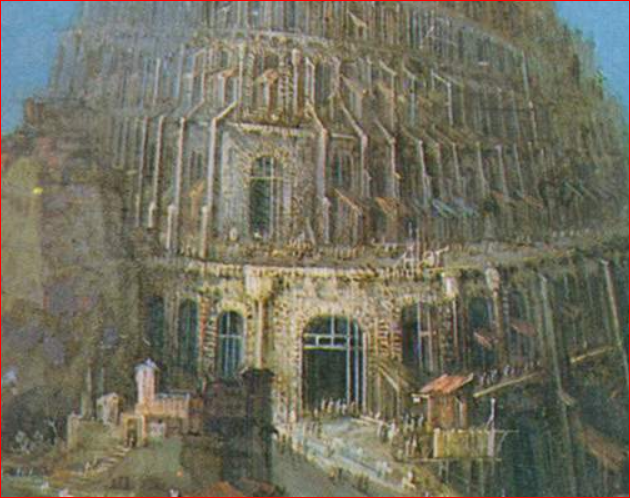
De Vuyst, Belgium, sells on 22 October 2016 a "Circle of Hendrick van Cleve III" Tower of Babel, estimated at 6,000 to 9,000 Euro.
Hendrick van Cleve III is one the most prolific of the Flemish Babel painters, and in June I highlighted a huge work by or after him.
This Tower however is a "Circle of" or even "Attributed to" Lucas van Valckenborch, another of those Babel painters, since the work for sale is a copy or alternative version of a work I already displayed during the discussion of yet another Babel painting sale in March 2015 (many of these were made, but they are still popular and often wonderful to look at). This version can be found in the Museum of Strasbourg.


The one for sale now is much more detailed though, and much more precisely painted, which is unusual for a copy or for the work of a follower. The way the tower is constructed (e.g. the arches, the flying buttresses, ...) and the general look of the work are closer to another work attributed to the hardly known Lucas van Valckenborch II, from the Museum of Geneva.
It looks as if this work is either the original or much closer to the original, and that both the work from the Strasbourg Museum and the work from the Geneva Museum are copies after it. This is to me more likely than the reverse, that a very skilled copyist took elements from two paintings and created this new one. It thus seems to be a work from either Lucas van Valckenborch or his Workshop, and should be worth at least 20,000 Euro.
UPDATE: sold for 14,000 Euro, double the estimate, but if I'm right still a bargain.
Hendrick van Cleve III is one the most prolific of the Flemish Babel painters, and in June I highlighted a huge work by or after him.
This Tower however is a "Circle of" or even "Attributed to" Lucas van Valckenborch, another of those Babel painters, since the work for sale is a copy or alternative version of a work I already displayed during the discussion of yet another Babel painting sale in March 2015 (many of these were made, but they are still popular and often wonderful to look at). This version can be found in the Museum of Strasbourg.
The one for sale now is much more detailed though, and much more precisely painted, which is unusual for a copy or for the work of a follower. The way the tower is constructed (e.g. the arches, the flying buttresses, ...) and the general look of the work are closer to another work attributed to the hardly known Lucas van Valckenborch II, from the Museum of Geneva.
It looks as if this work is either the original or much closer to the original, and that both the work from the Strasbourg Museum and the work from the Geneva Museum are copies after it. This is to me more likely than the reverse, that a very skilled copyist took elements from two paintings and created this new one. It thus seems to be a work from either Lucas van Valckenborch or his Workshop, and should be worth at least 20,000 Euro.
UPDATE: sold for 14,000 Euro, double the estimate, but if I'm right still a bargain.
Tuesday, 11 October 2016
"Flemish School" is Circle of Gerrit Van Honthorst
De Vuyst, from Belgium, sells on 22 October 2016 a "Flemish School, 17th cnetury" Saint Cecilia, a nice sized (95 by 119 cm) work estimated at 3,000 to 5,000 Euro.
It is a good copy after Gerrit Van Honthorst. The 1623 original can be found in the Gemäldegalerie in Kassel, Germany (with very similar dimensions, 90 by 116 cm, info from RKD), but different copies from the same period are known.
One such was sold at Sotheby's in 2008 for £10,000. Slightly smaller than the one here (71 by 85 cm), it was at first glance in a worse condition and not in general better painted either (e.g. the highlighting of the clothing of Cecilia is much better in the version for sale). However, the one for sale has some issues (e.g. the hands of Cecilia have two colours, and there is a strange spot or some damage in her mouth), not really clear to me whether she needs some restoration or whether some restoration has gone wrong.
Still, it should easily fetch the upper estimate.
UPDATE: sold for 3,300 Euro, a bit less than I expected.
It is a good copy after Gerrit Van Honthorst. The 1623 original can be found in the Gemäldegalerie in Kassel, Germany (with very similar dimensions, 90 by 116 cm, info from RKD), but different copies from the same period are known.
One such was sold at Sotheby's in 2008 for £10,000. Slightly smaller than the one here (71 by 85 cm), it was at first glance in a worse condition and not in general better painted either (e.g. the highlighting of the clothing of Cecilia is much better in the version for sale). However, the one for sale has some issues (e.g. the hands of Cecilia have two colours, and there is a strange spot or some damage in her mouth), not really clear to me whether she needs some restoration or whether some restoration has gone wrong.
Still, it should easily fetch the upper estimate.
UPDATE: sold for 3,300 Euro, a bit less than I expected.
Friday, 16 October 2015
Follower of Abraham van Beyeren or Pieter Claesz
De Vuyst, from Belgium, sells on 24 October 2015 an "Anonymous, 17th - 18th century, possibly environment of Pieter Cornelis van Rijck" Still Life, a large work (92 by 140cm) estimated at 2,000 to 3,000 Euro.
It is a very nice work, with lots of details, painted in a lively manner (less "flat" than many second-rate still lifes). I tried to identify the artist (or school) by focusing on similar details in other Flemish or Dutch still lifes, but while I found many related works, I couldn't really pinpoint one name. The most likely is Abraham van Beyeren (1620-1690), a Dutch master. The author given in the description, Pieter Cornelisz de Rijck, (1567-1637) seems less likely to me, as he seems too early for some details.
De Rijck is perhaps the artist for works like the "Rich Man and Lazarus" (pictured, now reassessed as "anonymous").
A closely related work, sold at Sotheby's as anonymous (ca. 1610), shows a copper kettle which is quite similar to the one in the work for sale. The Sotheby's is better painted, more detailed and correct, though rather posed.
The work for sale is more of a "Pronkstilleven", a still life showcasing richdom and opulence. which only became popular after 1640 (i.e. too late for Rijck and the like). Adriaen van Utrecht was the first great master of the genre, and Abraham van Beyeren perhaps the most important. Central elements, aside from rich fruits, were often a nautilus shell cup, silverware, and two things represented here as well, the "Buckelpokal" (no real English translation seems to exist, it's an elaborate golden or gilded cup on a stem, often with a statue on top of the lid), and porcelain or delftware. Above is an example of Carstian Luyckx showing most of these elements, with on the right two Buckelpokals; and an example from Peter Willebeeck, with the pokal as central element.
Luxurious porcelain or earthenware can be seen in e.g. the above work by Jan Davidsz de Heem. The detail is from the work for sale, for comparison.
The Pokal often was rather bulbous (hence the "Buckel", German for "stud" as a rounded ornament). Abraham van Beyeren was one of the few masters of this genre to also include non-bulbous Pokals, like in the first of the above examples (the second is by Willem Kalf, from the Rijksmuseum; the third is by Pieter Claesz.). The fourth image is the Pokal from this painting, again for comparison. Sadly, I haven't found an identical one in any painting, as that would most likely seal the attribution.
Beyeren is also one of the few of these painters to use a similar copper kettle like the one in the work for sale. The above, from the Mauritshuis, again isn't the same kettle (too bad...). The second example, by Frans Ykens, also isn't quite the same thing. The third is again the one for sale...
Usually, in this paintings there is an element of the vanitas-genre, a warning that all luxury and bling-bling is only temporarily (either as a well-meant message or as a superfluous extra to appease the more conservative critics). Typical is an empty glass or roemer on its side, or a nearly-empty glass or bottle (the more in-your-face types include a skull). I haven't found another example with an empty glass with an orange (or other citrus fruit) peel in it. Many paintings feauture a nearly empty glass with the peel in it though. Typical is the bottom example by Jan Davidsz. de Heem, from the Met. Other examples can be found in the work of Jan Pauwel Gillemans the Elder. The difference in painting quality with the work for sale is obvious, but keep in mind that this is comparing a smallish detail to a full work.
Now, I haven't spent a lifetime studying these still lifes, so probably for most things I state above a better example can be found and my statements refuted: please do, I like to learn about these things. But with what I know and have found, it seems obvious that this painting is from ca. 1640-1650, not from Rijcke or someone around him, but more likely somewhere close to Abraham van Beyeren. It isn't a masterpiece, not like the Heda or Kalf I pictured, but it is a good example of this genre, the zenith of the still-life in some aspects, and should be worth a lot more than what is estimated. Compared to what many utterly boring still lifes from this period fetch, it should get 10,000 Euro.
UPDATE: sold for 3,300 Euro, above the highest estimate but way below what I felt it should be worth.
Update from 19/10/2015. Looking at this further, another likely candidate, not for the immediate artist but for the circle, seems to be Pieter Claesz (1597-1660), a Flemish painter who was mainly active in Haarlem. This painting should be compared to his later, post-1640 work.
His works contains quite similar elements, including not-bulbous buckelpockals (example from the Gemaldegalerie Alte Meisters pictured), lidded pitchers of the same model, ...
UPDATE 29/12/2015: a reader alerted me to an art shop site, anticstore.com, where Galerie FC from Paris (sounds more like a soccer club!) offers this painting, still attributed (incorrectly in my view) as "Dutch School of the end of the 16th century, attributed to Pieter Cornelisz van Rijck or Ryck", but with a much more realistic price tag of 15,800 Euro. So it seems that I wasn't the only one believing that this painting was worth a lot more!
UPDATE 07/10/2016: still for sale at Galerie FC, now for 11,800 Euro.
It is a very nice work, with lots of details, painted in a lively manner (less "flat" than many second-rate still lifes). I tried to identify the artist (or school) by focusing on similar details in other Flemish or Dutch still lifes, but while I found many related works, I couldn't really pinpoint one name. The most likely is Abraham van Beyeren (1620-1690), a Dutch master. The author given in the description, Pieter Cornelisz de Rijck, (1567-1637) seems less likely to me, as he seems too early for some details.
De Rijck is perhaps the artist for works like the "Rich Man and Lazarus" (pictured, now reassessed as "anonymous").
A closely related work, sold at Sotheby's as anonymous (ca. 1610), shows a copper kettle which is quite similar to the one in the work for sale. The Sotheby's is better painted, more detailed and correct, though rather posed.
The work for sale is more of a "Pronkstilleven", a still life showcasing richdom and opulence. which only became popular after 1640 (i.e. too late for Rijck and the like). Adriaen van Utrecht was the first great master of the genre, and Abraham van Beyeren perhaps the most important. Central elements, aside from rich fruits, were often a nautilus shell cup, silverware, and two things represented here as well, the "Buckelpokal" (no real English translation seems to exist, it's an elaborate golden or gilded cup on a stem, often with a statue on top of the lid), and porcelain or delftware. Above is an example of Carstian Luyckx showing most of these elements, with on the right two Buckelpokals; and an example from Peter Willebeeck, with the pokal as central element.
Luxurious porcelain or earthenware can be seen in e.g. the above work by Jan Davidsz de Heem. The detail is from the work for sale, for comparison.
The Pokal often was rather bulbous (hence the "Buckel", German for "stud" as a rounded ornament). Abraham van Beyeren was one of the few masters of this genre to also include non-bulbous Pokals, like in the first of the above examples (the second is by Willem Kalf, from the Rijksmuseum; the third is by Pieter Claesz.). The fourth image is the Pokal from this painting, again for comparison. Sadly, I haven't found an identical one in any painting, as that would most likely seal the attribution.
Beyeren is also one of the few of these painters to use a similar copper kettle like the one in the work for sale. The above, from the Mauritshuis, again isn't the same kettle (too bad...). The second example, by Frans Ykens, also isn't quite the same thing. The third is again the one for sale...
Usually, in this paintings there is an element of the vanitas-genre, a warning that all luxury and bling-bling is only temporarily (either as a well-meant message or as a superfluous extra to appease the more conservative critics). Typical is an empty glass or roemer on its side, or a nearly-empty glass or bottle (the more in-your-face types include a skull). I haven't found another example with an empty glass with an orange (or other citrus fruit) peel in it. Many paintings feauture a nearly empty glass with the peel in it though. Typical is the bottom example by Jan Davidsz. de Heem, from the Met. Other examples can be found in the work of Jan Pauwel Gillemans the Elder. The difference in painting quality with the work for sale is obvious, but keep in mind that this is comparing a smallish detail to a full work.
Now, I haven't spent a lifetime studying these still lifes, so probably for most things I state above a better example can be found and my statements refuted: please do, I like to learn about these things. But with what I know and have found, it seems obvious that this painting is from ca. 1640-1650, not from Rijcke or someone around him, but more likely somewhere close to Abraham van Beyeren. It isn't a masterpiece, not like the Heda or Kalf I pictured, but it is a good example of this genre, the zenith of the still-life in some aspects, and should be worth a lot more than what is estimated. Compared to what many utterly boring still lifes from this period fetch, it should get 10,000 Euro.
UPDATE: sold for 3,300 Euro, above the highest estimate but way below what I felt it should be worth.
Update from 19/10/2015. Looking at this further, another likely candidate, not for the immediate artist but for the circle, seems to be Pieter Claesz (1597-1660), a Flemish painter who was mainly active in Haarlem. This painting should be compared to his later, post-1640 work.
His works contains quite similar elements, including not-bulbous buckelpockals (example from the Gemaldegalerie Alte Meisters pictured), lidded pitchers of the same model, ...
UPDATE 29/12/2015: a reader alerted me to an art shop site, anticstore.com, where Galerie FC from Paris (sounds more like a soccer club!) offers this painting, still attributed (incorrectly in my view) as "Dutch School of the end of the 16th century, attributed to Pieter Cornelisz van Rijck or Ryck", but with a much more realistic price tag of 15,800 Euro. So it seems that I wasn't the only one believing that this painting was worth a lot more!
UPDATE 07/10/2016: still for sale at Galerie FC, now for 11,800 Euro.
Subscribe to:
Posts (Atom)